
I used to think great entertainment was mostly about talent. A gifted performer. A brilliant director. A clever script. That was it, right?
Well, not exactly.
A few years ago, I attended an immersive live show that completely rewired my understanding of what “entertainment” actually means. The lights moved like they had personalities. The stage felt alive. Even the way the audience entered the venue felt choreographed. I remember sitting there thinking, this feels intentional. Not just produced — designed.
That’s when I started paying attention to the invisible layer behind unforgettable experiences. The strategy. The psychology. The spatial storytelling. And that’s where the role of an entertainment design company quietly becomes the difference between something that’s simply watched and something that’s felt.
Let’s talk about that difference.
Entertainment Isn’t Just Seen — It’s Engineered
We live in a world overflowing with content. Streaming platforms. Live events. Experiential pop‑ups. Theme parks. Product launches that look more like Broadway productions. Audiences aren’t just consuming — they’re expecting immersion.
And immersion doesn’t happen by accident.
There’s a blend of architecture, technology, branding, choreography, acoustics, lighting science, digital integration, and behavioral psychology all working together behind the curtain. It’s part art, part engineering, part storytelling.
You might not know this, but when you walk into a high-end themed venue or attend a global brand activation, almost every sensory detail has been mapped out long before you arrived. The height of the ceiling affects how expansive the experience feels. The color temperature of the lighting subtly influences your emotional state. The pacing of transitions between spaces guides your attention without you even realizing it.
That orchestration is rarely the work of one person. It’s typically the collaboration of strategists, designers, engineers, and creative directors who specialize in turning ideas into environments.
And honestly, when it’s done well, you don’t notice it. You just feel it.
The Shift from Passive to Participatory
Entertainment used to be more linear. You sat. You watched. You applauded. The end.
Now? Audiences want agency. They want to move through spaces. Touch things. Interact. Post about it. Share it in real time. The line between spectator and participant has blurred.
This shift has forced brands and event producers to rethink how experiences are built from the ground up.
It’s not enough to have a stage and a spotlight. Today’s experiences often involve projection mapping, augmented reality layers, synchronized lighting systems, interactive displays, spatial audio design, and data-driven personalization.
The complexity can be staggering.
That’s why companies specializing in experiential environments have become central players in global entertainment ecosystems. A seasoned entertainment design company doesn’t just “decorate” a space. They analyze audience flow, technical feasibility, brand identity, emotional impact, and scalability — all at once.
It’s strategic storytelling in three dimensions.
Where Creativity Meets Logistics (and Budget Reality)
Here’s something people don’t always consider: creativity without feasibility is just fantasy.
The most compelling entertainment designs are rooted in logistical clarity. Structural engineering requirements. Safety regulations. Load-bearing calculations. Fire codes. Equipment access points. Electrical demands.
Not the glamorous stuff — but absolutely essential.
A friend of mine once worked on a touring show that had breathtaking visual concepts. On paper, it was extraordinary. In practice? The staging couldn’t fit into half the venues on the tour. Adjustments were made on the fly. Costs ballooned. Stress levels soared.
That’s the kind of situation experienced entertainment design teams are built to avoid.
They bridge imagination and implementation. They understand that spectacle has to function. That magic still requires a blueprint.
And when budget constraints enter the conversation — as they always do — creativity becomes even more interesting. Limitations can actually sharpen design thinking. The challenge becomes: how do we deliver emotional impact without unnecessary excess?
The answer often lies in precision rather than scale.
The Psychology of Wow
Let’s get into something subtle but powerful: emotional architecture.
Have you ever walked into a space and immediately felt small — in a good way? Or energized? Or nostalgic?
That’s design psychology at work.
Color theory, sound design, spatial compression and expansion, lighting intensity shifts — these tools are deployed intentionally to guide emotional journeys. In immersive theatre or themed attractions, designers think in terms of narrative arcs. The space itself becomes a character.
I was surprised to learn how much neuroscience plays into modern entertainment design. Certain lighting rhythms can increase anticipation. Curved pathways create a sense of exploration. Even scent can anchor memory.
We tend to attribute emotional reactions to the content we’re consuming. But often, the environment is doing just as much heavy lifting.
That’s not manipulation. It’s craft.
And in a competitive entertainment landscape, craft matters.
Technology Isn’t the Star — It’s the Amplifier
There’s a misconception that high-tech equals high-impact. More screens. Bigger projections. Louder audio.
But technology without narrative integration can feel hollow. Almost cold.
The most effective designs use technology as a storytelling amplifier, not a distraction. Projection mapping that extends a storyline. Interactive installations that reinforce brand messaging. Immersive LED environments that adapt dynamically to audience energy.
When you see a seamless fusion of story and system, chances are you’re witnessing the work of specialists who understand both disciplines fluently.
It’s not about chasing the newest gadget. It’s about knowing when — and why — to use it.
Global Brands Are Investing in Experience Capital
Look at major international brands right now. They’re pouring resources into experiential marketing, flagship stores that feel like museums, immersive product launches, branded entertainment districts.
Why?
Because experience drives memory. And memory drives loyalty.
Digital ads disappear with a swipe. But a well-designed live activation? That can live in someone’s mind for years.
Forward-thinking organizations recognize that partnering with an experienced entertainment design company is not just a production expense — it’s a brand investment. It shapes how audiences perceive innovation, quality, and emotional resonance.
And in markets where differentiation is razor-thin, that perception is invaluable.
Beyond Stage and Screen
It’s also worth noting that entertainment design extends far beyond concerts and theatre.
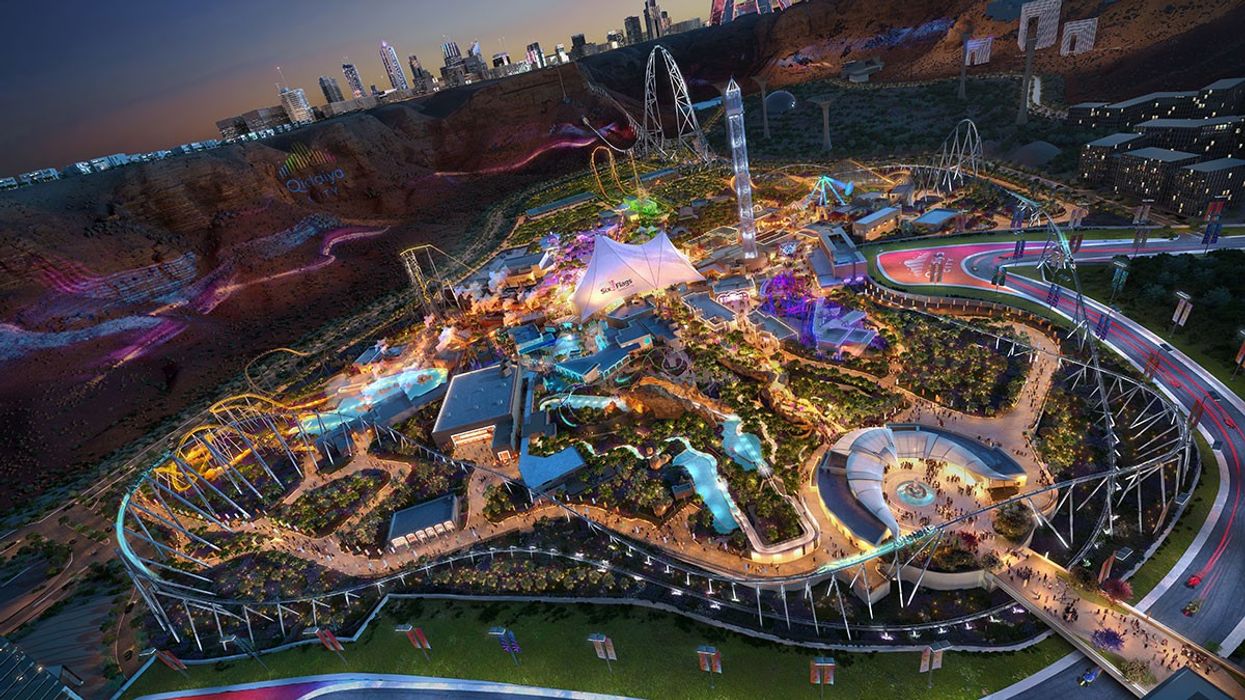
We’re talking theme parks. Cruise ships. Museum exhibits. Corporate headquarters. Retail environments. Esports arenas. Luxury hospitality venues. Even large-scale public art installations.
Anywhere experience intersects with audience engagement, design strategy comes into play.
The pandemic years accelerated this awareness. As live gatherings paused, organizations began reimagining how physical spaces could offer something digital platforms simply couldn’t replicate: presence. Sensory immersion. Human proximity.
The rebound in experiential projects since then hasn’t been accidental. It reflects a deeper cultural craving for shared environments that feel meaningful.
The Invisible Collaboration
One thing I’ve come to appreciate is how collaborative this industry truly is.
Behind every polished environment is a network of specialists: architects, lighting designers, show programmers, fabricators, digital artists, project managers, engineers, creative directors. It’s orchestration at scale.
And it requires humility.
No single discipline dominates. The best outcomes emerge when technical teams respect creative intent and creative teams respect structural constraints. That balance isn’t always easy. But when it clicks, the result feels effortless.
That’s the paradox. Immersive entertainment may look spontaneous, even magical — but it’s often the product of rigorous planning, iteration, and recalibration.
Why It Matters More Than Ever
We’re entering an era where attention is fragmented. Notifications compete with narratives. Multitasking is the norm.
Designing environments that genuinely hold attention — that create pause — is becoming both harder and more valuable.
People don’t just want to be entertained. They want to be transported. They want to feel part of something larger than themselves, even if just for an hour.
That emotional transport doesn’t happen through chance. It’s constructed.
And perhaps that’s the most compelling reason this field continues to grow. Entertainment design sits at the intersection of culture, technology, psychology, and architecture. It’s shaping how we gather, celebrate, learn, and connect.
A Final Thought
The next time you step into a venue that takes your breath away — whether it’s a concert hall, immersive exhibit, or branded event — pause for a second.
Look beyond the performers.
Notice the lighting transitions. The spatial flow. The way sound wraps around you. The way the experience seems to unfold naturally, almost intuitively.
That seamlessness? It’s deliberate.
We often credit entertainers for how they make us feel. And rightly so. But behind many of those unforgettable moments stands a carefully engineered environment designed to support them.
In a world saturated with content, thoughtful design is what elevates entertainment from temporary distraction to lasting memory.
And honestly, once you start seeing that hidden layer — you can’t unsee it.

